
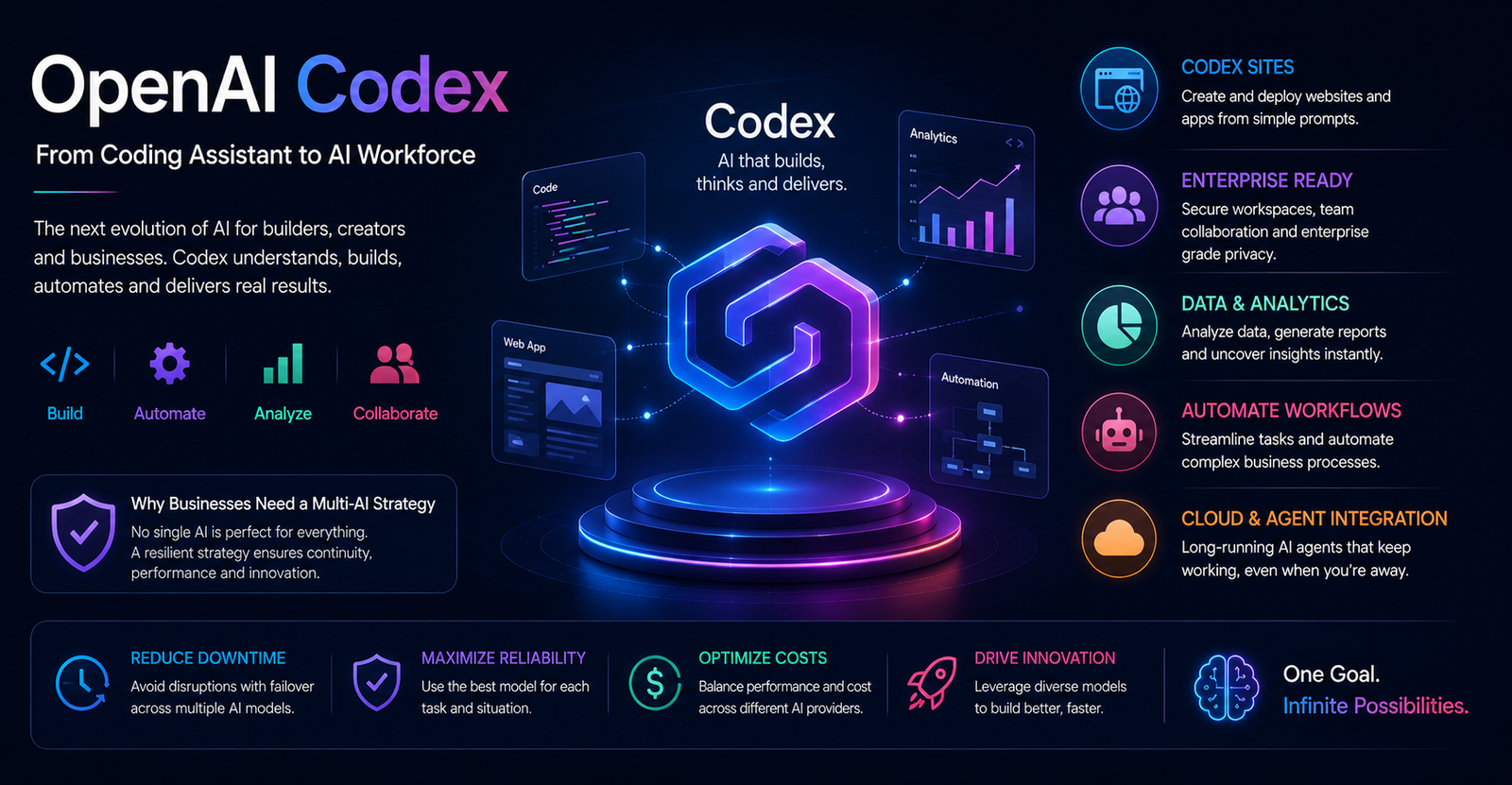
OpenAI Codex: Evolving from a Coding Assistant to a Digital Workforce.
Artificial Intelligence is rapidly transforming the way businesses operate, and one of the most exciting developments in 2026 is the evolution of OpenAI Codex. Originally known as an AI-powered coding assistant, Codex is now expanding far beyond software development and positioning itself as a powerful tool for knowledge workers, enterprises, and business teams.
The latest updates show that Codex is no longer focused solely on writing code. OpenAI is transforming it into a platform capable of building websites, creating dashboards, analyzing data, generating reports, and automating complex workflows. This shift represents a major step toward AI systems that can perform real business tasks rather than simply assisting users with individual requests.
One of the most significant announcements is Codex Sites, a feature that allows users to create and deploy websites and interactive applications directly from simple prompts. Instead of spending days designing and developing a project, businesses can describe their requirements and let AI generate the solution. This has the potential to dramatically reduce development time and increase productivity.
OpenAI has also introduced role-specific capabilities for teams working in sales, analytics, product design, and operations. These enhancements enable Codex to support multiple departments within an organization, making it a valuable business tool rather than just a developer resource.
Another major development is the expansion of enterprise-focused features. Organizations can now use Codex within collaborative workspaces, allowing teams to automate workflows, manage projects, and streamline daily operations. Combined with new cloud integrations and long-running AI agents, Codex is moving closer to becoming a digital workforce that can continue executing tasks even when users are offline.
For business owners, this evolution is particularly important. Companies are constantly searching for ways to reduce operational costs, improve efficiency, and accelerate innovation. AI platforms like Codex could help organizations achieve these goals by automating repetitive work and enabling employees to focus on higher-value activities.
The future of AI is no longer just about generating content or writing code. It is about creating intelligent systems that can actively contribute to business growth. OpenAI Codex is becoming a clear example of this transformation, showing how AI can evolve from a simple assistant into a powerful digital collaborator.
As businesses continue to embrace AI-driven operations, Codex may become one of the most influential tools shaping the future of work.
#OpenAICodex #ArtificialIntelligence #AgenticAI #FutureOfWork #AIAutomation #TechTrends #Innovation #AIForBusiness #DigitalTransformation #OpenAI